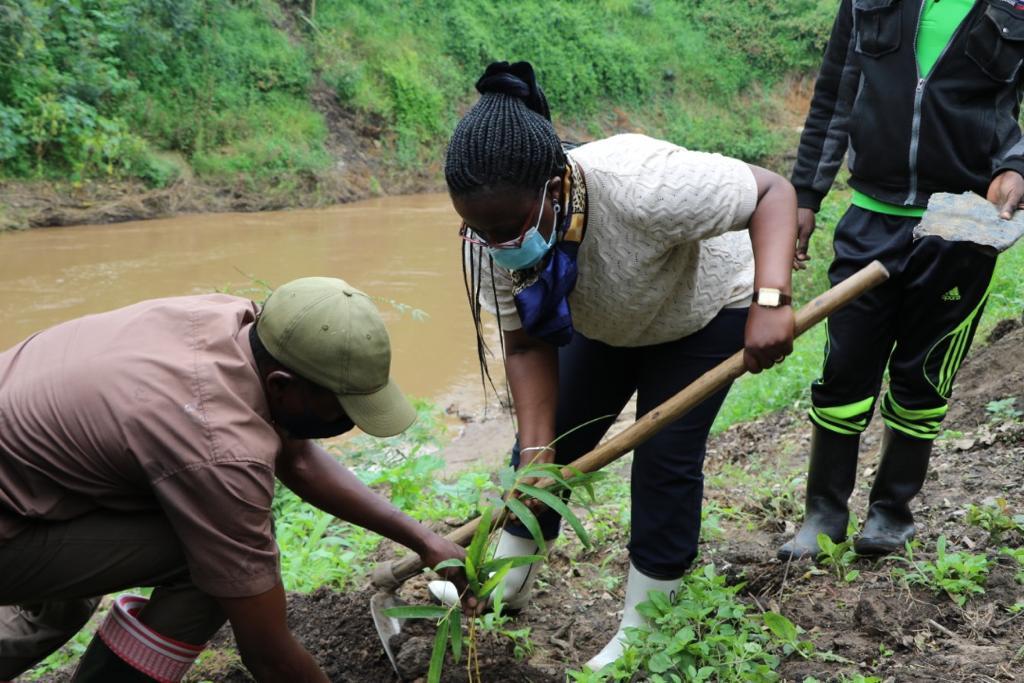
The riverbank had been bare for nearly six years before our restoration team and twelve community volunteers began work in early 2025. Today, we are proud to share that the riverside is covered with thriving native tree saplings, stable soils, and returning insect and bird species.
Why This Watershed Mattered
Water-source protection is one of our four biodiversity conservation pillars. A healthy watershed prevents soil erosion, filters clean water for farming households downstream, and sustains regional climate cooling.
Over past years, agricultural runoff and deforestation had stripped the soil of its nutrients, making it highly susceptible to flash floods.
Community Action on the Ground
We began by introducing organic mulching techniques to farmers living closest to the river. This keeps moisture locked in the soil and prevents weed competition. Next, our volunteers dug over 500 silt-trapping planting holes, securing the banks with bamboo and local acacia roots.
The project trained four new "tree champions" who now monitor seedling survival monthly, ensuring that our efforts lead to sustainable, long-term ecological recovery rather than short-term statistics.